Aerospace Industry Trends

Aerospace Industry Trends
The aerospace industry is evolving at unprecedented speed, driven by electrification, digitalization and advanced manufacturing. From electric propulsion to AI-enabled flight operations, this transformation demands a partner who combines century-long expertise with precision, reliability and scale. Parker Aerospace is that partner. With a legacy of engineering excellence and a global reach, Parker supports next-generation platforms from nose to tail—integrating systems, optimizing performance and powering cleaner, smarter flight.
Key Aerospace Trends



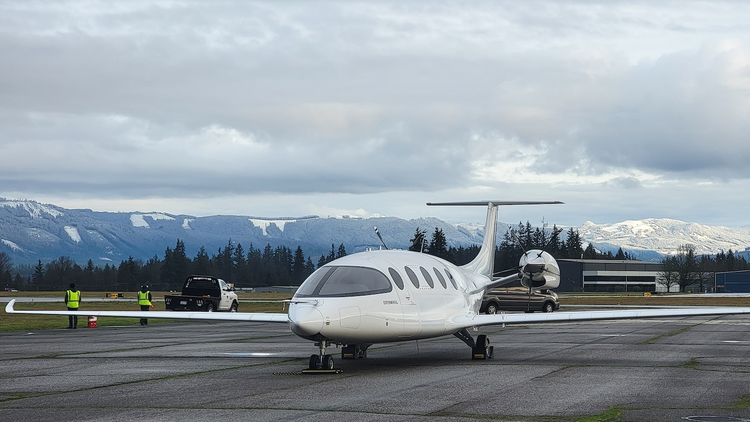
Aerospace Advancements
As the industry accelerates toward climate-neutral aviation and intelligent operations, Parker supports engineers with technologies that meet the moment and anticipate what’s next.
How Parker Drives Aerospace Innovations
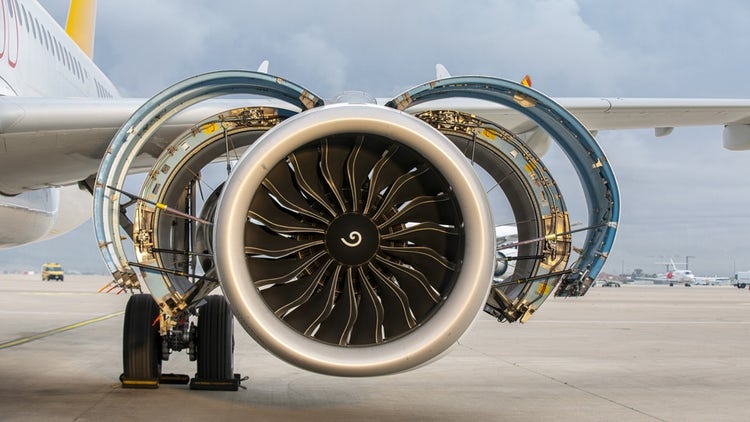
With tens of thousands of aircraft flying Parker systems and products today, our legacy is proven and our future is built on unmatched engineering expertise.
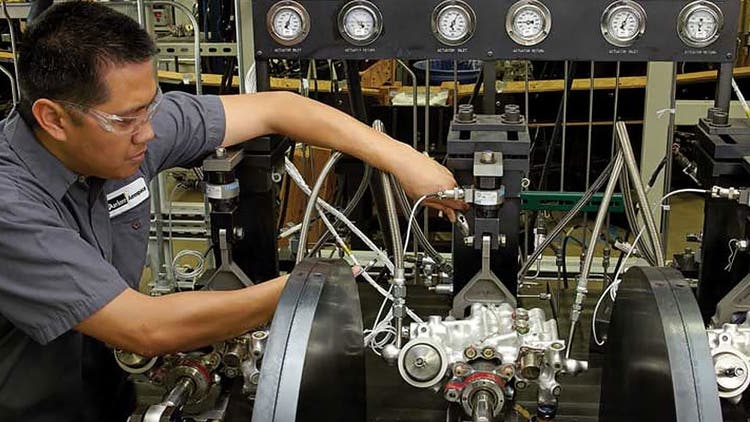
- Precision Components for Critical ApplicationsAerospace demands precision. Parker delivers components engineered for reliability, performance and integration across the most demanding environments.
- Lightweight, High-Strength MaterialsParker’s innovations in materials science support lighter, stronger and more efficient aircraft—enabling performance gains from the wingtip to the engine core.
- Collaborative PartnershipsParker works side-by-side with aircraft and engine manufacturers to co-develop solutions that meet evolving requirements, resulting in accelerated timelines and elevated outcomes.
Parker’s Commitment to Aerospace Excellence
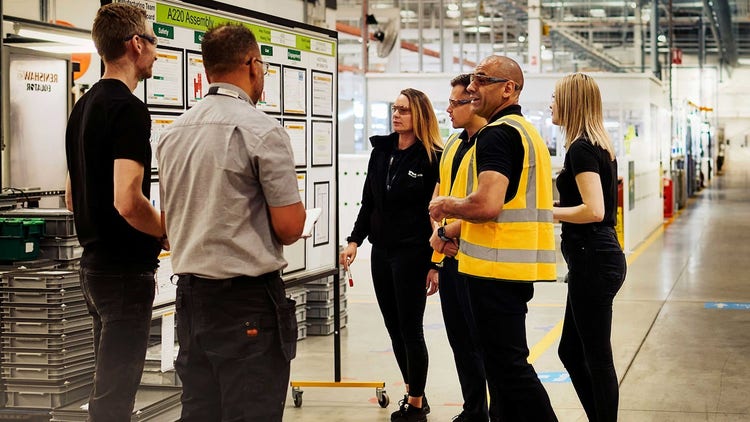
Parker integrates aerospace trends into every facet of its operations, from manufacturing to quality control.
- Advanced Manufacturing & Supply Chain Strength
With additive manufacturing capabilities and robust supply chain management, Parker ensures agility, scalability and resilience across global operations.
- Zero Defects Initiative
Parker’s quality systems, including industry-recognized programs, drive toward zero defects through rigorous process control and continuous improvement.
- Product Innovation
Recent developments across thermal management, fluid systems and engineered materials reflect Parker’s commitment to solving tomorrow’s challenges today.
- Efficiency, Safety & Aviation Sustainability
Every Parker solution is designed to enhance aircraft performance, reduce environmental impact and uphold the highest standards of safety and reliability.
Engineering Next-Generation Aerospace
Parker makes the extraordinary happen and shapes the future of sustainable aviation in partnership with their customers. We are the partner of choice for aerospace OEMs and MROs to solve difficult problems and seize important opportunities.


Aerospace Market
Parker is leading the way for the future of aerospace with differentiated technologies across commercial-defense and advanced air mobility applications. These innovations enable lighter, more efficient aircraft, next-generation engines and sustainable aviation propulsion. Dive deeper into the Aerospace market.
Aerospace FAQs
What is sustainable aviation, and why is it important for the future of aerospace?
Sustainable aviation focuses on reducing environmental impact through cleaner energy, efficient design and lower emissions to ensure long-term viability of air travel.
What systems are being electrified in modern aircraft?
Modern aircraft are electrifying propulsion, actuation, environmental controls and auxiliary systems to improve efficiency and reduce fuel use.
How does hydrogen fuel technology work in aerospace applications?
Hydrogen fuel cells generate electricity through chemical reactions, offering a clean energy source for propulsion and onboard systems.
What is predictive maintenance, and how does it increase aircraft reliability?
Predictive maintenance uses real-time data and analytics to anticipate failures, minimizing downtime and enhancing safety.
What is advanced manufacturing in aerospace?
Advanced manufacturing includes techniques like additive manufacturing, automation and digital modeling to produce lighter, stronger and more precise aerospace components.
Market Glossary
Sustainable aviation refers to technologies, aircraft designs, fuels and manufacturing processes that reduce the environmental impact of flight. This includes electric propulsion, hydrogen-powered aircraft, hybrid aviation systems and lighter, more efficient materials that lower fuel burn and emissions. Sustainable aviation is central to the industry’s goal of achieving net-zero carbon emissions.
Electric aircraft use battery-powered electric motors for propulsion instead of traditional jet fuel engines. In aerospace, electric aviation is advancing regional and commuter aircraft, urban air mobility platforms and hybrid-electric systems that reduce emissions, noise and operating costs.
Hydrogen-powered aviation uses hydrogen fuel cells or hydrogen-fueled combustion engines to power aircraft. Hydrogen systems enable zero-carbon flight with high energy density, making them a promising solution for long-range commercial aviation and next-generation defense aircraft.
AI-driven aviation applies artificial intelligence, machine learning and advanced sensors to optimize flight operations, automate systems and improve aircraft readiness. Predictive maintenance uses AI to analyze aircraft data in real time, identifying component wear before failure, reducing downtime and improving safety and operational efficiency.
Advanced manufacturing refers to cutting-edge production methods such as additive manufacturing (3D printing), automated assembly, advanced composites and lightweight metals. These technologies reduce aircraft weight, accelerate production cycles, increase part reliability and lower lifecycle cost.
Miniaturized satellites—often called CubeSats or smallsats—are compact, low-cost spacecraft designed for commercial, scientific and defense missions. They support communications, Earth observation, space research and rapid-deployment space architectures.
Interconnected aerospace systems combine electromechanical components, advanced sensors, filtration technologies, hydraulic and pneumatic systems and digital fluid and gas controls. Together, they enable intelligent aircraft platforms, efficient propulsion, reliable fuel and thermal management and next-generation flight control systems.
Next-generation single-aisle aircraft represent the future of commercial air travel, featuring advanced propulsion systems, lightweight materials, electrification, improved aerodynamics and increased operational efficiency to support sustainable aviation growth.
Aerospace aftermarket services include maintenance, repair, overhaul (MRO), replacement parts, upgrades, and performance-enhancing retrofits that extend aircraft service life, improve efficiency and support fleet readiness across commercial and defense markets.
Defense aerospace certification ensures that materials, components, and manufacturing processes meet strict quality, reliability and security standards required for military aviation and classified systems. Certified supply chains are critical to defense readiness and mission assurance.
Aerospace Education
Innovation drives Parker’s ability to solve customers' challenges, educating about industrywide technological advances and aerospace-related news through resources such as blogs, white papers and more can serve to broaden perspectives and provide better understanding of Parker as a global company.
Adhesive Technologies: 2026 Engineering Playbook
Blog
EMI Shielding for Public Safety Drones
Blog
EMI Shielding Honeycomb Vents Application and Design Guide
Whitepaper
Fixed Cameras to 360° Vision: Aircraft Situational Awareness is Evolving
Blog
EMI Shielding Honeycomb Vent Panels for Secure Facilities and Shielded Rooms
Blog
Improved Thermal Management for Liquid Cooling Features in Data Centers
Blog
Inertial Measurement Unit Breakthrough Enhancing Next-Gen Aircraft Efficiency and Wing Designs
Blog
Parker Is Advancing Aviation Technology With New Braking Solution
Blog
Precision Under Pressure: Optimizing Radar Performance with Advanced EMI Shielding and Ventilation
Blog
Protect Commercial Aircraft from Lightning Strikes with EMI Shielding and Grounding Solutions
Blog